In less than two years, across nearly 3,000 kilometres of unknown country, a line was driven through the heart of Australia—connecting a continent and changing it forever.
Led by Charles Todd, hundreds of men carved the Overland Telegraph Line from Port Augusta to Port Darwin—36,000 poles at “twenty to the mile”—linking Australia to the world for the first time.
But the line was not laid across empty land.
It cut through ancient country, where its arrival brought conflict, resistance and lasting consequence.
In Twenty to the Mile, historian Derek Pugh retraces the line—revealing a story of endurance, ambition and survival, alongside the human cost of connection.
The Film
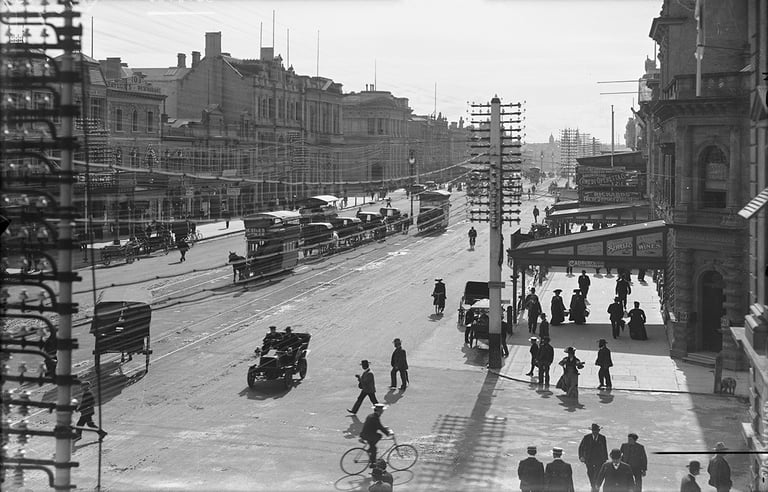
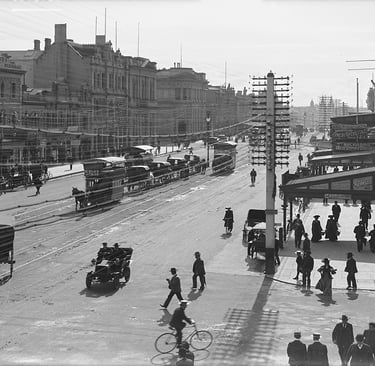
Adelaide, South Australia — King William Street, 1905.

Filmed along the original Overland Telegraph route, combining rare archival material with stories carried through generations.
The Overland Telegraph Line
Construction of the Overland Telegraph Line began in 1870 under the leadership of Sir Charles Todd, South Australia’s Superintendent of Telegraphs.
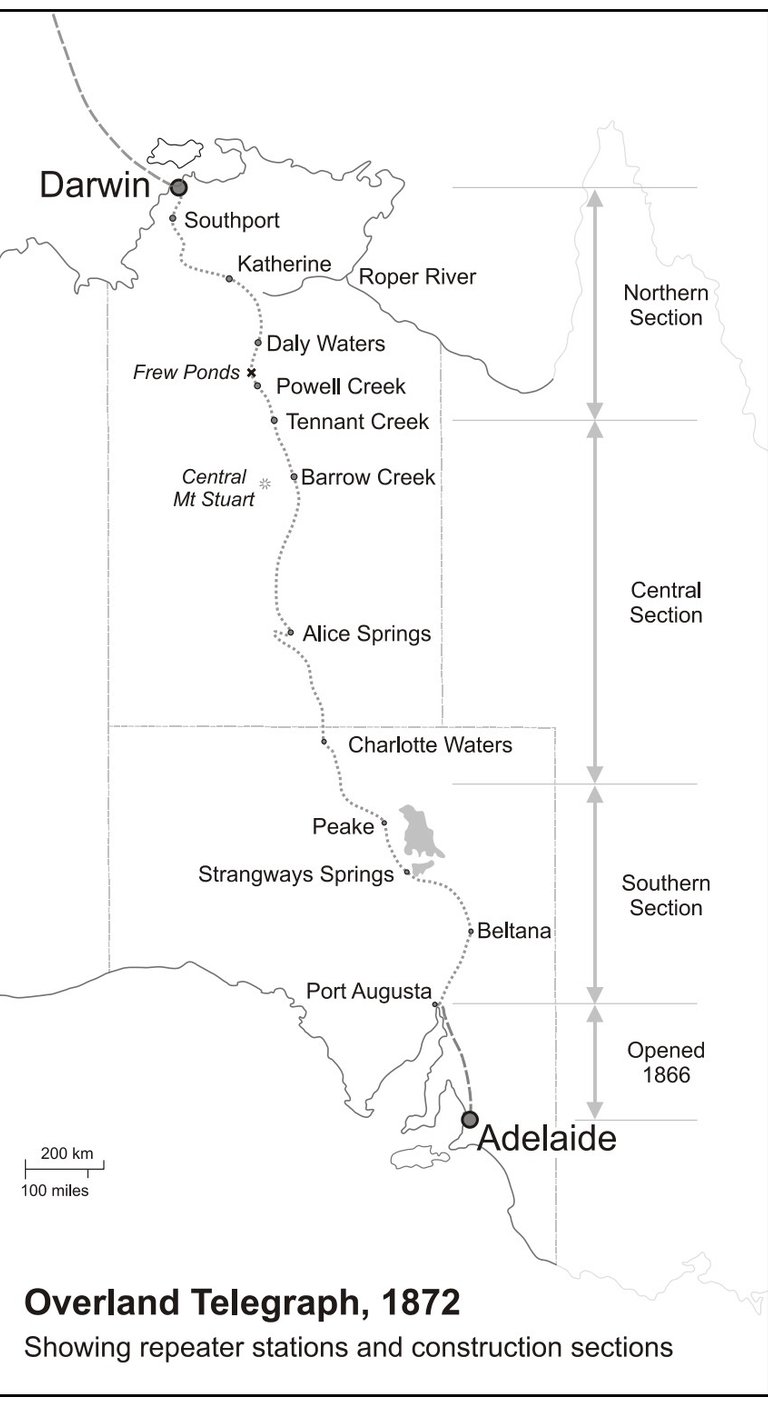
The line stretched nearly 3,000 kilometres from Port Augusta to Port Darwin, crossing some of the most remote and challenging terrain in Australia.
More than 36,000 poles were installed—spaced at “twenty to the mile”—creating a continuous line that would link Australia to the global telegraph network via an undersea cable from Darwin to Java.
Completed in 1872, the line reduced communication times between Australia and Europe from months to just hours.
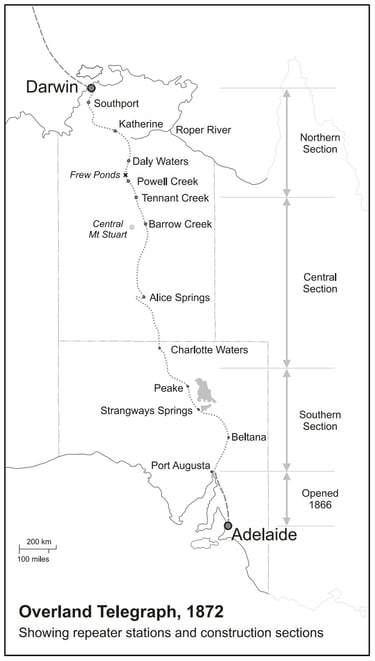
Along its route, a series of repeater stations were established at critical intervals, including locations such as Charlotte Waters, Alice Springs, Barrow Creek and Daly Waters. These stations formed the operational backbone of the line, relaying messages across vast distances and maintaining the system in some of the harshest conditions in the country.
Maintaining the line required constant effort. Isolated crews lived and worked along the route, repairing damage caused by weather, equipment failure and the challenges of operating in remote environments..
The Facts
The Mission
The development of the Overland Telegraph Line was the internet of its time.
It was the most important engineering project in Australia prior to the Twenty Century. It was central to the founding of Darwin and Alice Springs. Were it not for the OTL construction, it’s likely the Northern Territory would have remained a northern section of South Australia. This was the birth of the Northern Territory, as we know it today.
The new telegraph stations built for the OTL were also weather stations. The Head of the OTL Construction, Sir Charles Todd, was a visionary and an early convert to the ideas of climate change. He believed these remote weather stations, which could provide accurate, real-time forecasting were the future of meteorology. Was Charles Todd the first to suggest climate change as a human influenced phenomena?
What was the impact on First Nations Australia’s of the arrival of the OTL construction teams and were they on the frontline of Australia’s frontier wars?
Had the OTL been constructed in Queensland (as it very nearly was) and the undersea cable reached shore at Normanton (rather than Darwin), would the Northern Territory exist today in its current form? Would Darwin and Alice Springs exist?
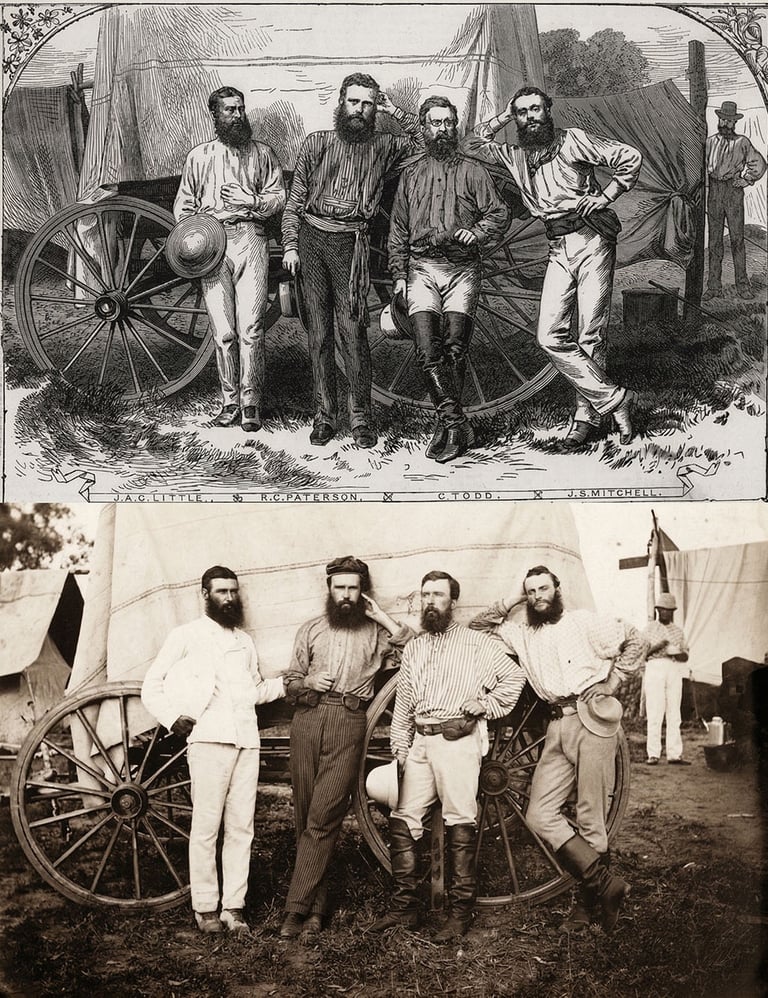
The Men Behind the Wire
The photograph captures the project's leadership in a rare moment of repose: from left to right stand J.A.G. Little, R.C. Patterson, the visionary Sir Charles Todd, and A.J. Mitchell, the men who orchestrated this collapse of distance across the Australian interior.